
I have been in education for decades. Yes, okay, I am old. This should come as no surprise if you’ve been following my blog! But my age aside, the trends I am seeing in education are becoming increasingly more disturbing. I addressed many of these in my last post, “When Did Schools Stop Being Schools”, but in this one, I would like to address Special Education and more specifically, Early Childhood Special Education (ECSE). To be blunt, when it comes to Early Childhood Special Education, at least in much of the country, we are treated as little more than an afterthought, something that has been mandated by the government, and reluctantly tolerated by most public school systems. In times like this, I feel like the comedic icon Rodney Dangerfield who infamously used the phrase “I don’t get no respect”. I hear ya Rodney!!
I have always felt this way, but the COVID pandemic has really shone the spotlight on this disturbing phenomenon. While funding is being poured into upper grades to create successful virtual teaching, Early Childhood Special Education (ECSE) is not even on the radar. I attended a recent training only to find out that we have not been given a budget this year, despite the fact that the county in general has been given millions of dollars to create a virtual curriculum. Before you say “Well, of course, high school students, AP curriculum etc. must come first. These kids are preparing for college. They must have every advantage, etc. etc.” Let me say, I agree that High School students are important, all students are, but High School students started somewhere and for some students, that was in a preschool special education program. Early Childhood provides the foundation for every child’s learning experiences. Without a solid foundation, the entire academic building would crumble. This is even more true in special education. If time and funding is put into a good foundation, it will save time and money later in a child’s academic career. I have never understood why politicians and those in a position to make decisions, have never understood that. For people who are rightly concerned with budgets, how do they not see nor read studies on the cost-effectiveness of investing in ECSE?
Consider the foundation in a building or a house. Is it not more logical to invest in a solid foundation that will hold the structure through time and the elements, rather than just do the bare minimum and have to repair and replace the foundation once the house is completed, perhaps years down the road? Repairing a broken foundation in an existing home or building is expensive, messy and often the structure will never be the same. Look at the picture below for instance.
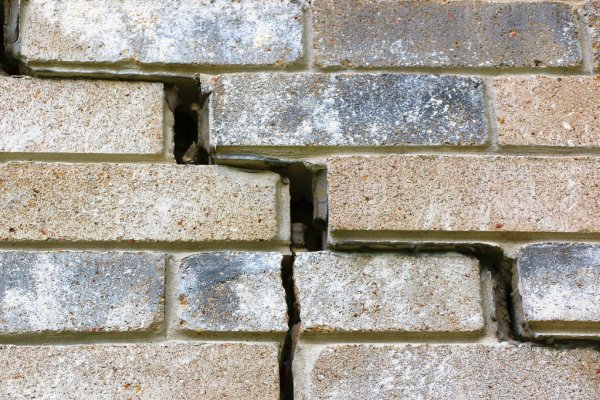
I am hardly an expert on construction, but I can tell you that repairing this would be a financial and logistical nightmare. If the builder had not skimped on funding, materials and time, perhaps this could have been avoided years down the road. The same is true of Early Childhood Special Education. If we invest the time and effort to create that strong foundation now, it will cost us less in time, money and pain later on. I know this as both a teacher and a parent. My son did not have Early Childhood options when he was in preschool, as 25 years ago, autism was not entirely recognized as a spectrum disorder. Most people, schools included, viewed autistic students as Dustin Hoffman’s portrayal of “Rainman”. If you were high functioning, you were considered “quirky” but there were no programs for my quirky, brilliant, but socially delayed son. Because of this, he developed and suffered from comorbid conditions such as depression, anxiety and Obsessive Compulsive Disorder, all of which affected his schoolwork. Despite his high IQ he considered himself “stupid” and the schools labeled him a “lazy under achiever”. They had no idea how much he tried and how much he suffered. It was not until years later, when I had him accurately diagnosed and began private therapy, that I learned what his needs were and how best to teach him. We spent a good part of his elementary school years playing catch up academically and healing him emotionally. While he is finally in a good place and finding his way in the world now, I am frequently brought to tears when I think of all the pain I could have saved him and how much further along he would be now, had he received early intervention…..a strong foundation, if you will. We were forced to repair that cracked foundation after the house was nearly completed and it was exponentially more difficult, not to mention expensive. Truth be told, that is why I changed careers and went into Early Childhood Special Education…..because I did not want families to have to go through what we went through. I wanted children like my son to have a strong foundation early in life, so they could build up incrementally instead of repairing their lives later, once the damage was done. I was so excited when I saw that early intervention was becoming a “thing”.
To say I have been disillusioned would be putting it mildly. While the Early Childhood Special Ed teams I have had the pleasure of working with have been some of the most selfless, empathetic, dedicated, hard working, loving teachers I have ever met, they all too often, do not get support from their districts, or if they do, it is minimal….the breadcrumbs left over after the K-12 get their meatball subs! (Okay, I’m Italian so usually reference Italian food, but you get my point). I have seen caseloads increase, as budget cuts warranted a reduction in teachers. The larger class sizes impact our effectiveness as educators.
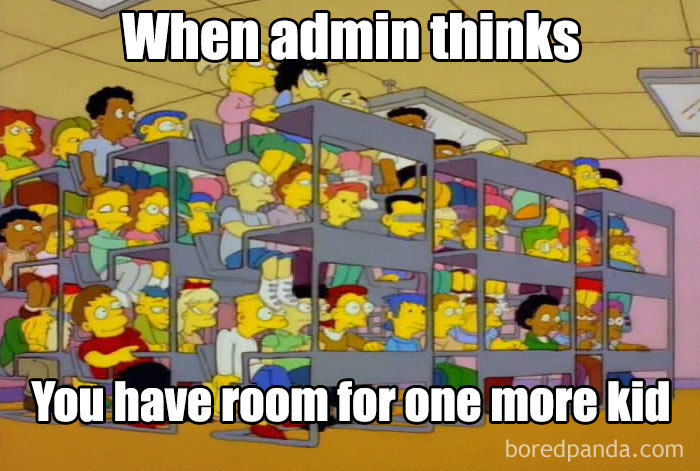
I have seen paperwork increased to the point where it is crippling efforts to teach effectively and yet, through it all, these amazing teachers, spend their weekends, evenings and summers working to create effective ways of reaching their students. They spend their own money buying materials and manipulatives to help a student whose needs exceed the materials provided by the district. I have seen teachers meet after work hours to strategize over a hard to reach student or hold the hand of a distraught parent. Early Childhood Education requires patience and a great deal of TLC for our families. Parents of preschool special education students are unique in that this is often the first time they are hearing that their child is not “normal”, that their children may struggle for the rest of his life and it is tough pill to swallow. I know. I have been there. It is our job as educators to assure the parents that with early intervention, their child may very well be successful, that their suffocating sense of hopelessness may be misplaced. We assure them we will coach and teach them the best strategies with which to help their children succeed and we do our best. The sad part is, over the years, I’m not sure the best teacher in the world is enough, when the funding is not keeping pace with the needs. And that, quite honestly, breaks my heart, as I think of all the children who will be lost and all the parents who will have to experience the same pain my family went through, because someone decided they are not important enough to prioritize.

This brings me back to how COVID 19 brought this front and center in my mind. While I always suspected this, I pushed it to the recesses of my mind, because I didn’t want to accept it. I didn’t want to realize that the work my colleagues and I do is so easily dismissed by not the families and students, but by those who make the decisions. It is discouraging and disheartening, so as with most painful realizations, I was in denial. But honestly, once the pandemic hit, I could no longer keep silent. When a school district is given a huge sum of money to create a virtual plan and not a penny is given to the ECSE program, how can we keep silent? When we are told that not only are we not included in the virtual budget, but if and when we go back to school, our students will be the first back, the canaries being sent into the coal mines so to speak, how can we not speak up?? Money aside, it is very discouraging to wonder how the School Board came to this decision. Yes, our students are the ones who will struggle the most with distance learning. I don’t think anyone would disagree that preschool students aged 2-5 will have trouble navigating google classroom etc. But there are other facts at play, that I have to wonder if anyone considered?? If and when our students go back it will not be under “normal” circumstances. Our students, many of whom are on the autistic spectrum, require routine and structure. How is starting them off virtually, getting into a routine and then sending them to school for two days, which is the proposed hybrid plan, helping with that? Also, given how many schools across the country started in person, only to have to return to virtual after a week or less, we have to consider our vulnerable students will be in what I call “a yo-yo “approach to education which is hardly conducive to routine and structure.

Another thing that the powers that be neglect to consider is that our children are the ones who will not be able to social distance from each other in the base case. The teachers will also not be able to social distance from their students as you cannot teach preschool and keep a safe social distance. It is not possible. These children will often need to have diapers changed, noses wiped, jackets zipped, shoes tied etc. ECSE teachers are coughed on, sneezed on, peed on, vomited on and often our clothing is used as tissues! And as far as hand washing?? Have you ever seen what a preschooler does with his hands??? Those children will spend more time at the sink than in any kind of learning. This is not in keeping with CDC guidelines and will be dangerous for the adults as well as for the other children.
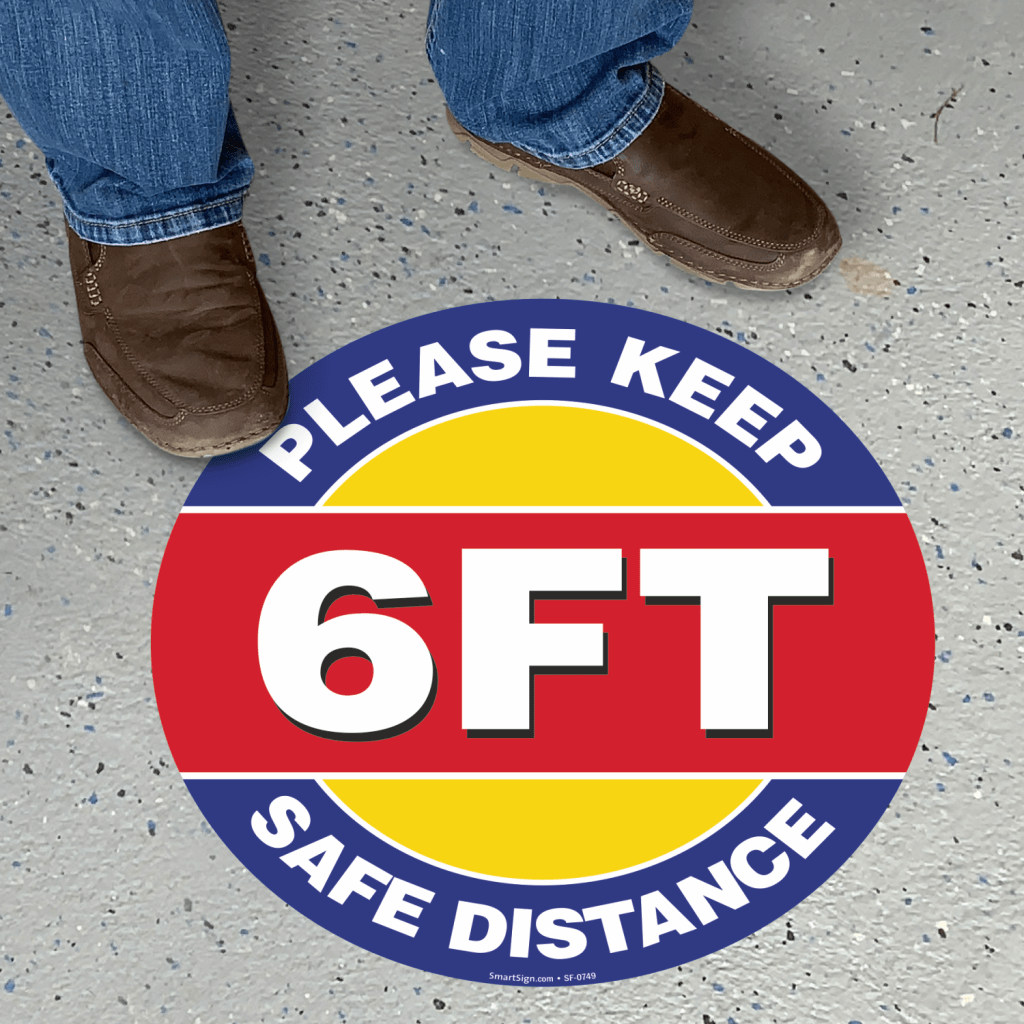
Next a preschoolers learning needs were not considered. The majority of our students need social skills training. They need to learn to play together, share, allow others into their personal spaces. Most students have socialization and play skills goals on their Individualized Education Plan (IEP). In a COVID environment, we will be reinforcing the very behaviors we are trying to change. We will be teaching them NOT to share, NOT to sit near their friends, NOT to let someone hold their hand or give them a hug. This to me will be so detrimental to their development and will certainly provide a major crack in their foundation which will need to be repaired at some point in their young lives, if they are to have even a hope of success. I can’t help but wonder who thought this would be a good idea and why, aside from the fact that we are, once again, an afterthought.
When discussing this at a virtual” not so happy hour”, my colleagues and I all felt deflated. We had just learned that not only will we get no financial support but we will be the first back in, to test the waters, as I mentioned earlier, the canaries in the coal mine. How can we not feel disheartened? One of my colleagues said “Lets face it, Special Education is the bottom of the totem pole. ” I took it a step further, Early Childhood Special Education is not even on the totem pole. We are the stake that drives the totem pole into the ground. And it was at that moment I realized how accurate the foundation symbolism is. If it is not for the stake or the bottom piece below the surface, that totem pole cannot stand, and the rest of it cannot be built. It reinforces the importance of Early Childhood Education as a foundation of learning. It is just very unfortunate that we are not seen, not acknowledged and aren’t even recognized. At this point, it is clear all we can do is focus on our children and families, as we have always done, as best we can and nod knowingly when we read articles referencing how special education teachers are leaving in droves and soon will be going the way of the dinosaurs. Respect?? Well, if Rodney Dangerfield could survive without it, I guess we can at least try as well…..but for how long??

 New Endings